Rita's Wheelchair Friendly Adventure at Longsands Beach in Tynemouth

Rita's Wheelchair Friendly Adventure at Longsands Beach in Tynemouth

Longsands Beach, in Tynemouth, is a model of an outdoor recreational site, including access and facilities for wheelchair users. Located in Longsands Bay, the natural beauty of the beach area attracts users for a range of outdoor recreation activities, including water-based sports activities, leisurely strolls, and bird-watching. The beach hosts international events, including surfing competitions. Maintenance, water quality, and beach facilities all contribute to its popularity. Local authorities are working on initiatives to ensure everyone can enjoy local natural beauty spots, seaside facilities, and outdoor leisure activities. Facilities are starting to be improved to make beaches and other outdoor places with great views accessible to people with disabilities; they see such areas as destinations where it is enjoyable to do things. On Longsands Beach, our beach wheelchairs have been available in front of the kiosk for one year for hire to use at any time, and longer-term borrowed free Beach Wheel Charter wooden wheelchairs with accessible pathways were launched at Easter 2010. There have been good reviews.

Improvements have been made to infrastructure and services, including visitor facilities, as part of a sports development project to make it more accessible and safe for visitors. Longsands Beach is a destination, making it convenient for users to visit, sit, and do things, all developed with users in mind. Resources and improvements have included softer surfacing of paths between visitor facilities to make pathways more comfortable and convenient in inclement weather. This facility is suitable for people with temporary mobility difficulties who are likely to use crutches, walking sticks, or frames for a broken leg, ankle, or other foot injuries. It is not of a size to be used with wheelchairs and pushchairs taxis. It is easy to use and does not require booking, payments, or paperwork to be completed. The pathway has been cut in, and surface materials are supplied by creating an erosion control construction of a surface water wetland with reed stepping stones. The building structure of the facility is a Public Domain Design. Planting around the whole front is indigenous because the external soft landscaping is done following the local interpretation of the words: "... the north should have a fresh rainwashed look..." And because new planting will help screen the toilet block. The surrounding drainage system forms part of a state-of-the-art lead in the public vigilance to the health of the marine environment.

Overview of Longsands Beach

Longsands Beach has been named one of the top travel destinations for UK beaches. In 2019, It was rated third out of 25 top beaches, and alongside neighbouring King Edward's Bay, it represents their destination of Tynemouth. Tynemouth is consistently listed within the top ten Destination Guides and in the top 100 of Britain's Best Seaside Towns. In 2014, it was rated as a welcome addition to a guide, stating that the vibrant 'Riviera' atmosphere could rival 'any number of the Mediterranean resorts.'

Longsands Beach and King Edward's Bay are commercial assets attracting footfall. Indeed, North Tyneside Council issued a tender and appointed a cultural branding agency to work on the strategic direction, brand positioning statement, essence, and guiding output for the Longsands and King Edward's Bay project. Based on a compelling proposition, they delivered design direction, name generation, and exhibition layouts to bring the brand to life. The branding aimed to ensure the area was known for its unique outdoor recreation and healthy living opportunities available to all, but without creating a place to just lie on the beach. The challenge for the proposed brand is to create a town node where higher-value visitor activity could be encouraged all year round, bringing in higher spending to restaurants, bars, accommodation providers, and retail facilities. Times quoted in our survey indicated that four out of five Longsands Beach visitors were still families with children. Longsands Beach is located in Tynemouth on the northeast coast of England. Tynemouth is a small town in the borough of North Tyneside and is part of Tyne and Wear.

Accessibility Features at Longsands Beach

One of the first steps needed to make Longsands Beach truly inclusive is to make it accessible to as many people as possible. One way this has been achieved is by installing a range of features that allow people with various levels of mobility to access the beach and adjacent paths. These physical changes include the installation of ramps that provide a gentle sloping route from the northern promenade down to the sandy beach. They also include the construction of a flat, stony path that allows access from Longsands South car park up to St. George's Church at the northern edge of Longsands Beach. These work together to provide access to a significant amount of the beach, access to the Sea Trials folly, and access to the boathouses and cafes along the beachfront, including Crusoe's and Tynemouth Beach Kiosks. Furthermore, Tynemouth has also invested in a range of equipment that can be hired and booked to help make the experience of going to the beach better for people with mobility challenges.

Referred to as 'Beach Essentials' stations, each of the three main beaches on the coast nearby provides beach wheelchairs, beach blankets, and beach mats, and the local council provides mobility scooters and manual and powered wheelchairs, free of charge, via a Bookable Challenge Wheelchair scheme. From speaking to users of Longsands Beach, it is clear that these modifications have made a big difference in how they, their relatives, and children visit and use the beach. One visitor expressed their appreciation for these modifications as they allowed them to access and enjoy the beach with their family and friends in the summer months and to relax, knowing they can easily get onto and off the sand. Another visitor also mentioned the importance of these modifications in making the beach welcoming for everyone, not just tourists and day visitors. When asked about the most enjoyable experiences when visiting Longsands Beach, one visitor stated, "It's lovely to see people enjoying themselves at the beach from various backgrounds," implying that Longsands plays a vital social role in the local area. These historical connections between the area and disability play into Longsands Beach's recent changes, reflecting the continued links between the site and inclusivity. Indeed, the general response to the inclusivity and accessibility measures was overwhelmingly positive from both locals and visitors to Tynemouth, given the number of people visiting here. Feedback about the visually distinctive chairs or the free hire of beach chairs was based on generally asking for more of the same.

Rita's Adventure: A Personal Account

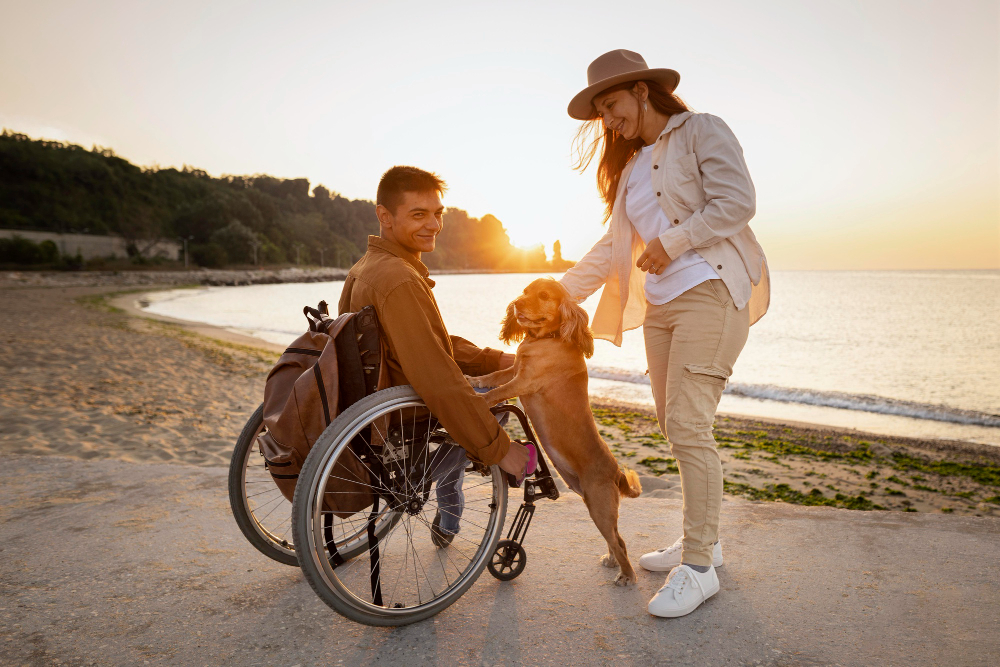
As she entered the car park at Tynemouth's Longsands Beach, Rita's nose crinkled at the scent of seaweed baking in a mid-July sun. She had been told that the changing place facility would provide a bed with a hoist and changing benches for someone like herself. When she asked, she was told there is a changing bench, with lots of room to move about. As Rita unpacked the bits of herself from her wheelchair that would help her fettle 'the beast', she stopped, and this is what she heard:

"Eh - what do you want to go down there for?"

So, Rita gets about in 'the sort of big wheelchair, like, to get her out and about' that Martin pushes. She's looking to get flush or as near as can be to nature. And she wants to wear her swimsuit alongside her companions. She knows she could just hoist her change of clothes into a backpack and perhaps that of the folk who help her walk, but she wanted the independence the changing bench would provide. Then, she could rejoin the people laughing and rambling in the early evening.

She thought A bit of beach, sea, and nature would be very nice. Rock pools attract her, and the sight of little fish darting away from the palm of her hand is very therapeutic. To get to Longsands Beach, we travel through that small town and meander past the remains of the Priory's ancientness and then, there it is, Longsands. Two well-known cafes and changing places are set back a little from the sweep of the beach, and at the road's end, there's a haven for doughnut lovers and sweet stuff fondlers. The promenade is at a low gradient when you enter its driveway, so crossing from the road to the beach is easy. You know you're at Longsands when you see and smell it. Hummelly drummers are people lounging about, chattering, and doing what people do at the beach. The sound of the sea waves in your ears and that smell. She took in a long, slow, relaxing breath. Only beaches smell like that. And it felt good as if fresh seaweed could bring some freedom to her in the absence of the special changing bench.

Rita's Background and Experience

Rita's Wheelchair-Friendly Adventure at Longsands Beach in Tynemouth

Rita who has used a manual wheelchair for the past year due to a spinal cord injury, with some hypaesthesia in her legs. When initially injured in 2016, she had some upper and lower abdominal weakness but had previously been able to walk with a stick. However, since a further fall, her mobility has been unusually poor. Rita encounters regular problems concerning physical access, particularly where a lack of facilities exists in older buildings. Also, on public transport, local restrictions apply to wheelchairs with spoke wheels, as with her standard wheelchair. Given her disabilities, Rita engages in a lot of sports, including wheelchair-specific sports. She also makes use of her electric wheelchair and wet chair.

For Rita, going to the beach holds a special meaning; a taste of heaven. It is normal for her to feel shivers down her spine and her hair stand on end from the experience of the sea and nature and to feel "powered up." The opposite can happen if she has not been outdoors or to the beach for a long time, making the experience somewhat distant for her. At the beach, "it feels very lonely and lost without the outside experience, being close to wildlife, close to water; it can feel very empty, very mentally isolated without that experience in our lives." She first went to the beach early in life and "felt it and wanted to experience more of it. It has always had an emotional appeal for me." The countryside first drew her attention when she was six, and she felt a similar reaction. Nature and the view drew her like a magnet. "I was into a little bit of art as a child... I think they were feelings of lighting up my heart and my imagination instead of engaging purely with family life." "Beach lovers" is the phrase her family would use, as they have shared in her passion. A carer would also take her to South Shields beach. After her work with a creative charity where they would take long walks and engage with the sea, she realized how much this emotionally uplifted her. As a child, her family would go camping often, and she remembers seeing lively pictures of gardens and animals in Cornwall. This "experience of wildlife was very captivating," Rita noted that she may have used it in a painting. An aunt had pointed out new and fascinating creatures and birds in these locales. "But not just that, she could see the little shore habitats I'd create."

Challenges and Triumphs

For much of the time I was at Longsands Beach, I was either dodging parked cars on the road, careering all over the place on the loose pebbles, or trying in vain to get back onto the promenade. I was reminded again and again that working together with local communities could indeed do a lot to break down cultural oppression around disability. Every now and then, I struck it lucky and was able to bask in the best that Longsands had to offer without having to fight for it – and in these times, it paid off in terms of my emotional response to the place as well.

I could give a big, blustery narrative to my visit to Longsands, talking about the emotional highs and lows, the struggle for physical access, the worry about what strangers might be thinking of me, and the personal triumphs coupled with feelings of deep spiritual connectedness to nature. I could then explain, as if it served as a heartrending punchline, that I only became a 'mystery shopper' for a folk-based group at the local college. But this would sum up attitudes to the place as trivial, complex, and ultimately reducible to the outcomes of one person's personal adventures.

Community Impact and Future Directions

An accessible Longsands Beach can strengthen an overall feeling of community by becoming more socially inclusive. Tourism can increase if Tynemouth, South Tyneside, and Newcastle are promoted as accessible to all. The economic benefits of tourism are well known. However, we should not only consider the economic business sense. The variety of visitors and their specific access and mobility needs and preferences will generally enhance the North East's tourism, recreation, and cultural offerings. The Heritage Coast will become more vibrant and unfold its full potential if a more diverse market of visitors uses the area. This could enrich the ongoing uses, stimulate the consumption behaviour of visitors and locals, and extend the use time of the outdoor space in general. With its variety of usage, the beach can integrate the outdoor area fully into the Northeast cultural landscape. The different users allow us to paint a rounded picture of the area. The outcomes of the preliminary stakeholder workshops show that the development of access, both for general access to the beach and for capitalizing on the socio-economic gains in tourism created through making the Heritage Coast accessible, should be a gradual process, incorporating stakeholder ideas and opinions. This staged development of access would also allow the statutory agencies and organisations to develop in-house strategies and policies that encompass the area and establish ways of engaging effectively with stakeholders. It is anticipated that the development of access initiatives will be taken forward by a voluntary hierarchical assembly of stakeholders, which has the support of the local authorities and other stakeholders, including the Beach Wardens. In developing and implementing the larger initiatives, connections and protocols involving various sections of the private, public, and voluntary sectors directly affected by the work would be drawn up. These connections include a beach users' action network and, as an initial strategy, promoting the beaches to various users. In developing the different strategies, clear lines of reporting and accountability will be established among stakeholders and councils. This is necessary so that there continues to be a basis for review and the scope to revise and integrate management practices to meet changing or developing people's needs and the conservation implications.

Benefits of Inclusivity at Longsands Beach

Longsands Beach is known to be a positive and inclusive community space, and people thought the benefits of increasing this would apply. Many people said that the main benefit of Longsands being even more inclusive than it is would be the increase in the number of people able to enjoy the beach and sea. Individuals with disabilities would have easier access to amenities, including water assessment. This would break down barriers and give people the freedom and the right to participate in everyday life. Someone commented that everyone has the right to sit on the beach. The emotional responses may be intangible but are expected to be significant. People also spoke about Longsands Beach being a place where everyone mixes together and that inclusivity here could encourage further inclusion in the community. People mentioned the emotional and social benefits of attending Longsands, reporting that they often take elderly relations not for a swim but to put their feet in the sea. People spoke about barbecues, parties, and family trips to the beach.

People consistently referred to the nice vibe here, and everybody chatted away. Some business owners and managers discussed how more visitors could boost the local economy. This would benefit the café owners, surf instructors, and other established beach users. The beach would attract the sandcastle and doughnut tourists who have previously bypassed Tynemouth in favour of Whitley Bay or South Shields. This broader user group is likely to include people from further afield. Parents caring for people with a disability could join in and socialize with their peers in the knowledge that if there was an emergency, the appropriate support would be available. Therefore, inclusion here could reduce social isolation. It was reported to help in supporting the well-being of informal carers.

Similarly, children and their siblings live with a similar, significant burden. Longsands was reported as a place in my community that enables the life of my children to be close to as mainstream as possible, despite one being a wheelchair user and the others not. Businesses and a café owner who was in touch with this community said the same. By providing facilities, they have built up a community of people who have one thing in common: disability. But they go surfing, paddle boarding, and coasteering together. They became friends, and they met for coffee at my business. So, inclusivity could indeed draw in visitors.

Recommendations for Further Improvement

The following recommendations are drawn from the results and are put forth to create a more physically accessible and inclusive experience for visitors to Longsands Beach. They are intended to be used not only as suggestions to improve Longsands Beach but also as a template, a potential "blueprint" that can be adjusted and adopted by landowners, managers, and practitioners to improve accessibility at their venues. There is a clear need for similar research on other venues or in-depth surveys of a greater number of venues so that greater or different locality-related recommendations can be given. Further suggestions for improvement include but are not limited to: - Additional ramps, wooden paths (enabling easier access to the beach) and the introduction of specially designed equipment (which allows wheelchairs to move over the sand without difficulty and encourages independent mobility on the beach). - Local partnerships and community partnerships that raise awareness of Longsands and all it has to offer. - Regular, ongoing assessments of both the improvements made and the needs that visitors report. - Collaboration with local disability advocacy groups regarding ongoing awareness raising and future development of the offer at Longsands. - Better staff training in disability awareness and what is possible at Longsands can help alleviate fears of the unknown. While all these recommendations are based on the results that we have gathered, and these were acknowledged as a useful component of progressive change in accessibility to Longsands, one conclusion was that there will always be different access needs and that we should not view this as an endpoint. The results and suggestions were informed by a checklist produced by the Countryside Agency and the concept of "ecotourism" experienced by some less able-bodied visitor groups. Our recommendations were partly informed by correspondence with a local association and the current practice and future expectations of Longsands Lifeguards. Our constraining factor was a lack of direct experience in the formulation of improvements to physical accessibility. We suggest that future work to operationalize our suggestions draws on community partnership recommendations and/or the experience of practitioners involved in the physical and site-level management of such areas as Longsands. Given that the nature and ethos of Longsands amply demonstrate public access, under the banner of "Access for All", is also a crucial governing factor to the recommendations in terms of operational management.

Rita Trip To Longsands Beach

Our case study of Longsands Beach has shown that outdoor recreation can play an important role in fostering engagement with one's community and contribute to an individual's general sense of well-being. Most outdoor recreation users are white but come from both Tynemouth and further afield. This reinforces the importance of offering a general welcome and involving local people in the development of the outdoors, thereby boosting community cohesion. Our in-depth study of Longsands Beach also demonstrates that a comprehensive approach to accessibility can add considerable value to user experience. Disability groups are the most likely to have specific needs whose consequences can easily be felt as barriers if not addressed, but they are far from being the only group to require some form of 'tweaking' to settings in order to gain an equal opportunity to participate successfully. Our focus group's strong opinions on additional features and the local business's initiative that has supported more tourists are testament to this.

Rita's Wheelchair Friendly Adventure

Our case study has also revealed that the benefits of enhancing Longsands to improve its inclusivity can reach well beyond the users for whom changes were intended: a welcoming focus keeps members of the wider public who experience temporary barriers satisfied and visiting and can benefit businesses by encouraging new customers. This demonstrates that creating and nurturing an ethos of local inclusivity at outdoor venues makes good local sense, both in principle and practice. The positive relationship between the changes and broader economic issues, such as higher numbers of users and increased diversity in the types of users, was analyzed in this report for Longsands Beach using available information. It is an area asking for a case study in its own right, implying that we suggest areas for further research. Conclusions: As with any aspect of the overall development of the outdoors, complete 'completion' of accessibility is, more or less by definition, an ever-shifting goal, where there is always more to do and more to improve. This report has sought to stimulate a process of reflection on the delivery of inclusion in the outdoor recreation sector. The research shows that all community sections' access and enjoyment of open spaces is an important function of managing the UK's countryside. Landowners and park managers are beginning to deliver in this area. There is more to do to complete this delivery.

Key Findings and Takeaways

Accessibility has greatly improved at Longsands, notably including a Mobi-Mat for wheelchairs and pushchairs and new sensory signs. This investment helps ensure accessible space, offering social, emotional, and economic benefits. For families like Rita's, this area is becoming the 'brains of Tynemouth,' somewhere they have clear, fresh air to wander on a Sunday morning. Beyond practical recommendations, we aim to ensure that people working in outdoor spaces or outdoor recreation planning are considering the human benefits of enhancing access to our surroundings.

Making outdoor spaces accessible provides a range of benefits to those already using the space and to new visitors who have previously not been able to enjoy it. It will bring economic benefits, and the difference that good training and clear information can make to everyone's experience should not be underestimated. What has been demonstrated here at Longsands is that there is scope to continue to think and reflect on better practices regarding inclusivity and our inclusion. What is suggested above has yet to be implemented. Therefore, Rita's narrative reflects a small part of a much larger picture that we should all care about and push for tangible change in our own areas.

Rita's story seems to encapsulate many of the issues and suggestions that outdoor recreation needs to address. She is one of many who suggested that there is an 'us' and 'them' when considering people with disabilities or people less able to access the outdoors. This is a real issue that needs to be addressed. Rita is a person that everyone can relate to, and she vocalised a sense of 'difference' and exclusion that does not and should not, exist in the first half of the 21st century. This suggests that the inclusivity of outdoor spaces in and around communities matters and that there are tangible, real-world benefits for all in making the outdoors accessible to as many people as possible.


Exploring North Yorkshire: A Travel Guide

Exploring North Yorkshire: A Travel Guide

Welcome to North Yorkshire! Tucked away quietly in the northeast of England, facing the North Sea, North Yorkshire has long been considered a true gem of a British location. Described as England's "Garden of Eden" by some, there is much more to this large county than first meets the eye. Full of rolling hills, stunning cliffs, and almost endless uninterrupted countryside waiting to be explored. Its stunning coastlines are home to those braving the wild cold waters with a range of water sports offered up and down the various stretches of sand and small harbours. North Yorkshire rewards those who travel off the beaten path, so far untouched by the mainstream excitement for modern, bustling cityscapes. Our travel guide will walk you through its culture, food, attractions, islands, national parks, and charming village towns you might not have heard of before. Known mainly for being rich in British culture and heritage, North Yorkshire is home to the once-Viking and Roman city of York. In the drive between York and the North York Moors railway station, it is possible to visit the thrilling passages in the city of York, which educate visitors on a range of historical periods in Northern England since Caesar's time, before moving on to Castle Howard. Parks and picturesque towns become the backdrop to endless strolls.

About North Yorkshire

Bordering Cumbria, County Durham, and the Humber River, North Yorkshire is part of the historical region of Yorkshire. Characterized by towering moors, mysterious forests, and serene harbours, North Yorkshire offers a rich tapestry of local traditions and breathtaking scenery. Attractions include the historic Scarborough Castle, the world-class Yorkshire Dales and the historical site of the Trolleybus Museum. The area is also famous for its numerous golf courses and equestrian centres, partly due to being well-suited to horse and deer riding. While the region's maritime climate can be cold and wet during winter, there are four distinct seasons. Travelers are encouraged to visit in the summer; however, the colder months are ideal for traditional English winter recreation.

One of the reasons North Yorkshire is such a magical place is that so many diverse cultures have previously settled there. The Celts, the Romans, the Anglo-Saxons, the invading Danes, the Norse, and the Normans – all left their mark. This mixture of northern races created a distinct and unique cultural landscape – a place like North Yorkshire cannot be replicated. Reflected in the many festivals and country fairs that can be enjoyed all through the year and the warm welcome visitors will receive is the rare and vibrant tapestry of rural life. The coastline of North Yorkshire is also the beginning peak of the Cleveland Way, which meanders through the North York Moors to Helmsley in the south. Out towards the natural North Sea border with hundreds of monuments, miles of idyllic golden beaches, and the North York Moors, the west coast comprises rocky headlands and spectacular chalk cliffs. The Flamborough Headland makes an ideal resting point for wildlife and birdwatchers, while the beautiful fishing ports of Staithes and Robin Hood's Bay are also steeped in history and heritage.

Getting There

    The scenic North Yorkshire is located on the UK's East Coast and is comfortably accessible from other cities and areas. Those driving to North Yorkshire will travel by the route A1 northwards, taking the East-Central route from London, targeting Newark. Alternatives to booking train tickets to Yorkshire will involve boarding trains that run between London and Edinburgh and Alnmouth if travelling from other cities, including Manchester, Edinburgh, Birmingham, and Newcastle. The final aspect of travelling to the Yorkshire area is travelling by aeroplane and landing at one of the local airstrips, which thrive there. Humberside Airport is most significant among these destinationsis, where a seamless air-to-road trip service operates. Local bus services connect the cosy travel spot of Scarborough on Sundays during peak season; pre-booking tickets is advised. Transportation to the garden town of Harrogate is easily accomplished by frequent bus services running to Leeds. With regular train services leaving from Cleethorpes to Hull, an interchange for the service to Sheffield will allow for the extension of travel to the market town of Shipton-by-Beningbrough. Travel on to York by train, having access to a range of services with high-speed rail companies. Remember to purchase tickets before travelling to secure the best price point online or further travel to Thirsk with a change in York. Replace local train services in Middlesbrough for a trip to Northallerton by bus. Finally, pre-booking a space on a local service to Bearsden upon Trent or Knaresborough for weekend travel is advisable.

    Taking P&O Ferries from Holland to Newcastle upon Tyne

    Taking the ferry from Holland also has its advantages. You can travel at your own pace, using the ferry ticket as an all-inclusive vacation, and have the lucky coincidence of being able to bump into some dolphins even before you arrive in Great Britain. Ferries also connote a wider range of voyages and add value. The ferry trips, however, do offer a wide range of amenities. First, a cabin with toilet, shower, television, and telephone. The ferry's self-service restaurant is open 24 hours. There is also a bar on board, while shopping opportunities are not lacking. Passengers can also use various games of chance in the casino, while artists can take photos or find enlightenment and relaxation in the chapel. Crossing the North Sea can be dangerous; it can be pretty choppy even when reasonably calm. Several ferries sail over the North Sea, although the ferry from Hull in the north of England to Zeebrugge in Belgium or Europoort near Rotterdam, the Netherlands, is much more prevalent in tourism. The ferry from Holland to Newcastle upon Tyne sails thrice daily, taking about 15 hours. It leaves IJmuiden at 17:30; the next departing ferry goes a little earlier, at 16:00, and the first early morning ferry goes at 09:30. Of course, ships, routes, and times can be subject to change. When booking a ferry, a seat must be reserved; without prior reservation, boarding is not possible. This costs about €10, but making a reservation on board is also possible. The time required to catch the eye is about 16 hours, though the voyage duration can vary. Everyone must be present an hour before departure at the terminal, but motorists must be there an hour and a half before their time of departure. Upon arrival in Newcastle, bus services to various destinations are already waiting in front of the building. Only passengers on foot must go to customs and immigration with the other passengers after leaving the terminal.

    Taxi to Runswick Bay

    Exploring North Yorkshire

    You will need to get from Newcastle to Runswick Bay, where I recommend you start your weekend. The most convenient way of getting to Runswick Bay would be by taxi. A chauffeur service would drive you for 85 miles and about 2 hours. This being the case, the trip would cost about £250. But car hire is also available for £30 per day. However, consider an additional insured driver where you must pay £10-12 a day, making your car hire totals of £40-42. It is worth mentioning that these costs are accurate as of the time of writing. Taxi to Runswick Bay: Newcastle taxi services generally operate at fixed prices to Runswick Bay, so it's worth discussing this before you book. A cab from Newcastle to the peaceful coastal village in North Yorkshire would take about 2 hours and 15 minutes to drive 85 miles. The fare generally costs approximately £270-300. While £300 may seem steep, taxi services are incredibly reliable across the North York Moors during the summer months. The railway line often becomes closed at these times. Arange of reliable taxi firms thatan get you from wherever you are staying in Newcastle to Runswick Bay. Pre-booking a taxi would be your best port of call about 2 weeks before you wish to travel, particularly if you are journeying over a bank holiday, half term, or the summer. Again, the fare could be reduced if you book a return. The North Yorkshire Coast, especially the Whitby and Runswick Bay locations, are known for attracting tourists and are popular places to eat and stay. The economy will differ with hotels, restaurants, and cafes, depending on the time of year.

    Discovering Runswick Bay

      Runswick Bay is a gem on our Cleveland coast of the North Sea. It extends along the bay, which puts out to sea to the north and encompasses a delightful little beach, the village straggling up the bank. The rising ground behind the bay always makes such a pretty background, and the walk from Runswick Bay up to the cliff top is enriching, enabling you to see that part of the cleavage of the coast. Some great interest is shown by the sideways thrust of the rocks under the sand. Their materials are primarily sandstones such as the Bretton and the Alum Shales, and under them is the Dogger, which is of no great botanical interest but can be seen more readily here than in many other places.

      An example of the striking coastal scenery can be discovered in Runswick Bay, a village that straggles around the curve of a bay containing an unexpectedly small sandy beach hemmed in by high cliffs and rocky scars. Its singular charm and accessibility help make it quite a magnet at holiday times, as does its community atmosphere, complete with art galleries, local shops, and very characterful restaurants. It has drawn summer visitors for centuries. Many have returned en famille – one of the most eventful times to come is perhaps on New Year's Day when Runswick's famous dog racing takes place. The time of day and month plays little part in how much one might appreciate Runswick Bay. It is beautiful for walking either along the coastline north to Staithes or south to Kettleness or for shorter walks higher up along the cliff top. Swimming is safe; there's more than enough sand to build vast castles, and how the cliffs cup the sand causes the sea to warm up quickly. A regular bus service connects Runswick Bay with the surrounding towns, villages, andas Sandsend and Whitby.

      Attractions and Activities

      Runswick Bay is packed with attractions and activities to cater to everyone. For the history buff, there's the nearby and world-renowned Staithes, home of Captain Cook. Visitors can wander the cobbled streets and then relax on the harbourfront while watching the many boats bobbing around. Creative individuals will enjoy visiting the Captain Cook and Staithes Centre to see artwork, photography, gifts, and books from local artists celebrating the birthplace of James Cook. Alternatively, why not visit the village of Hinderwell, where you can pop into the Cleveland Ironstone Mining Museum and get an exciting insight into the village's history.

      If local nature appeals to you, the Cleveland Way is nearby and offers a short, gentle stroll or a strenuous all-day hike to vantage points such as Kettleness, Roxby, and the top of Old Runswick. The southern section of the Cleveland Way, reaching as far as the small fishing town of Whitby, is graded moderate, and walkers will be rewarded with stunning scenic views as they amble along the coastal path. And for the water lovers among us, the neighbouring bay of Sandsend and the town of Whitby provide coastal access to scuba divers, surfers, sea anglers, sailors, and more. For those who prefer a less pacey approach, the Blue Flag beach in Sandsend is ideal for paddling, bathing, and picnicking on the sandy beach. For wildlife enthusiasts, Robin Hood's Bay is one of the best places on the coast to see seabirds such as Kittiwakes and Fulmars; alternatively, get the old-world railway steam nostalgia at the North York Moors Railway, which starts in the famous market town of Pickering. There is also a range of events, from regattas to folk weeks to tractor festivals and more, to cater toto various interests and hobbies. And after all that activity, why not visit one of the hidden eateries and cafes in and around the bay.

      Exploring the Surrounding Area

        If you're drawn to Runswick Bay, there's a good chance you're also attracted to the sheer beauty of the surrounding North York Moors. Sure, coastal towns are always built to snag your attention with their charm and novelty, but when I travel, I always aim to explore the surrounding area of a place I'm visiting to gain a broader understanding of where I am. From Runswick Bay, there are three nearby areas that you can see for day trips. Each has enough going for it that you could easily spend a day exploring one of these towns on your visit to Runswick.

        Saltburn-by-the-Sea is the closest town to Runswick Bay, and by hopping on a bus, it's only about a 30-minute ride down the coast to get there. Exploring Saltburn is an excellent way for travellers to experience visiting a possibly overlooked place for a day. The town of Whitby is a bit further away from Runswick Bay than Saltburn, about 50 minutes by bus. Still, it is a popular day trip due to its rich history, excellent beach, spooky associations, culinary delights, and lovely location at the mouth of the River Cree. Buses to and from Whitby run approximately once an hour. Inland, the market town of Pickering is about 40 miles east of Runswick Bay. If you've ever wanted to visit a place that's existed for nearly 2000 years, Pickering is the place to go! This Yorkshire town has historical attractions, like the 13th-century castle ruins, Beck Isle Museum, and the North Yorkshire Moors Heritage Railway. Buses to and from Pickering run about once per hour and take over three hours.

        Nearby Towns and Villages

        If you're holidaying in Runswick Bay, you won't miss out on visiting the neighbouring villages and towns along the Yorkshire Coast. Saltburn-by-the-Sea is great to see. Saltburn has long been a popular coastal resort, and its pier, which was purpose-built for pleasure, is the perfect place to start your visit. At the town's heart is a traditional Victorian feel, reflected in the architecture, the parks, and the elegant houses of the period. The city is also famous for its funicular railway - one of the world's oldest water-powered cliff railways and a ride that should not be missed. Whitby is a small port and busy fishing town at the mouth of the River Esk, a natural harbour nestling below the cliffs. Whitby has loads to offer, with something for everyone of all ages. There are fish and chip shops, restaurants, and some fascinating shops and boutiques. The little village of Goathland has one foot firmly in the past. People have lived in the surrounding area with early medieval settlements and Viking farms for over 2000 years. However, it is perhaps Goathland's appearance in the TV series and the first film that has added to the charm and popularity of this idyllic and historic Yorkshire Moors village, set within the North Yorkshire Moors National Park, only 9 miles from the coast at Whitby. Staithes is an old fishing village considered one of North Yorkshire's prettiest. With its tiny harbour filled with fishing boats, cliff-hugging cottages, and kipper smokehouses, the village of Goathland is also well worth a visit and may look familiar to you if you're a fan - it has been featured in both. Inland towns to visit include Pickering and Helmsley, while for a small shopping spree, head to nearby Guisborough to enjoy the town's twice-weekly market or explore the forest at nearby Great Ayton.

        Happy Day Out for Tom and His Son

          Oh, and here we are at the end! I hope you've enjoyed this travel guide to North Yorkshire; getting to wax rhapsodic about a place very close to my heart is always a pleasure. Love or loathe it, no denying North Yorkshire is drop-dead gorgeous. The area is ever-changing – the summer will bring more than enough life to be packed into these picturesque streets, and the winter will make you fall in love all over again with the wide-open gracing spaces you see here now. The weather here can get quite dreary, but I've shared some of my favourite rainy-day activities and the best things to do during the summer, each as helpful as the last. I firmly believe North Yorkshire and Runswick Bay are the perfect destinations for families with children.

          So let's backtrack a little: it dawned on you that Runswick Bay might be the right place for your next trip, and you started researching the area. You read about the bay and its three sisters, you heard tales of mayhap-once-upon-a-time shipwrecks and golf balls, and you saw it all coming together as you looked for places to eat and sleep, laughed at the gallery with the jumping sheep and marvelled at how quickly this unique place coaxed you into wanting to visit. I hope you'll take that plunge. Adventure beckons here at every turn, for every person with every taste. There's more to discover here than I've attempted to showcase in this comprehensive guide. One last thought before I leave you to your own explorations: please, remember to leave this place exactly when you found it. Whether you are a native of Yorkshire or the UK or a traveller from even farther abroad, everyone is a guest in this stunning part of the North Yorkshire coast. Let's make sure there's plenty more left for everyone to enjoy!

          Book a Taxi Service call Newcastle Taxi Service on 077 8888 2008

          Improving Accessibility in Taxi Services for Wheelchair and Disabled Customers

          Improving Accessibility in Taxi Services for Wheelchair and Disabled Customers

          Accessible transportation is vitally important for the lives of people with mobility impairments, and we argue that taxi services are part of this solution. This essay portrays and reflects on the experiences of wheelchair and disabled customers of taxi services. This complementary insight into the lifeworld of people with mobility impairments in their local area underlines the real-world impact of not providing better access to viable taxi services. Our participants reported experiencing material and non-material consequences of insufficient and absent taxi services. These lesser alternatives contributed to disempowerment and various negative personal and societal spatial, economic, and social issues.

          The Equality Act makes it illegal for taxi services to discriminate against people with mobility impairments, and it is now illegal to refuse to carry a wheelchair user. However, the quality of service still needs to improve. Little is known about how wheelchair users currently experience the taxi services provided to them. Understanding these experiences will help identify potential solutions that can improve the lives of a section of the disabled community. Before considering the broader context, this essay will look at taxi services in a small town, a touch smaller than others. We consider how lack of area size affects taxi services and illustrate the importance of an inclusive approach to understanding the issue. In doing so, we further highlight why inaccessible taxis and poor infrastructure matter. The essay is structured as follows. The next section provides an overview of the law, practice, and recent debate, including a contemporary legislative change. The following section details how we conducted our research and introduces the towns that we studied. In the next section, we draw on the experiences of two wheelchair users to illustrate some of the continuing challenges that their local taxi services present. We take a step back in the following section to examine disability policies and regulations. Establishing that these fall short on both a micro and a macro level, it is time to require service providers to deliver the supply of, and the routes for, public and private means of transportation that are both equivalent and adequate. The final section considers the views of the disabled participants we were able to follow up with and the types of solutions they told us they believe might improve access, primarily for public transport but also for private transportation.

          Challenges Faced by Wheelchair and Disabled Customers

          Accessing taxi services is impossible. There are many problems for wheelchair and disabled customers who want to book a taxi. First, there are not enough vehicles around the city that are accessible. If individuals call a taxi company, they cannot book one with access to a wheelchair. Even if there are wheelchair-accessible vehicles, drivers refuse to pick up requests from disabled persons. They expect an extra cost from customers, which is actually illegal. Many wheelchair users are at risk during the cold at night. These individuals use their wheelchairs to commute to work every single day. They try to call for accessible taxis but can’t get one. The taxi company told them to wait 40 minutes or even 2.5 hours, but no taxi was coming. Consequently, they have to stay late, making it very cold or freezing outside. In some cities, there is no guarantee that you will get taxis, even if the booking rates are quite high.

          Beyond needing a little break from time to time, people with disabilities must be strategic about travel to get ahead of the crowds packing in and out of trains or buses — trains have a two-person maximum for wheelchair users. If you end up waiting in line, it could be more challenging to get a carriage reserved for passengers with disabilities. For wheelchair and disabled customers, travelling around the city is already tough, complicated, and dangerous enough, but the biggest evidence of all is the emotional and mental tension. They make their journey stressful and risk getting depressed. Risking their physical health is even more stressful. Disabled people know they can no longer rely on taxi services when they desperately need them, so getting on a bus or a public vehicle is the only alternative. However, they can also be a potential cause of discrimination and violence. Knowing they face these challenges makes them feel lost, isolated, and terrified. It can take a lot of time, a great deal of complicated mental pressure, and an enormous burden.

          Technological Solutions for Improved Accessibility

          Improving Accessibility in Taxi Services

          Recently, many apps have been developed to book accessible vehicles or advertise one’s services as a driver. These apps aim to match customers with the appropriate service or vehicle through an accessible platform. These apps mainly focus on providing a list of drivers or available vehicles near your location, which is possible in part due to GPS tracking technology that captures driver data to produce a list based on who is available at that moment. This same principle has been applied to lodge bookings for accessible accommodation at a hotel chain in collaboration with a charity.
          Other apps are aimed at pedestrians with mobility issues, showing locations of public facilities and shops that offer accessible facilities, such as disabled toilets. Though not specific to taxis, this app genre demonstrates potential application within the taxi industry. Some services also factor in a pre-planned wait time and offer the option to track the vehicle from their app. They also advertise accessible vehicles and any unique benefits these services offer. The apps available for pre-booking an accessible vehicle also vary in the level of service they offer paying customers. Many offer the option for different payment methods and the ability to leave feedback, whether this is on the driver service provided or both. Through these affordances, user reviews and ratings can be accessed, apart from directly asking in-app for a rating of the driver and the user’s experience. Another area of assistive technology and vehicle manufacture that may potentially address accessibility issues in private hire vehicles is the introduction of new vehicle designs, including but not limited to WAV.

          Best Practices and Case Studies

          Case studies and best practices
          Toronto, New York City, Leeds, Los Angeles, Kyoto, Portland, Boston, Ottawa, Lexington, Grand Rapids, and Philadelphia boast successful accessible taxi systems. Each city’s strategies and programs may have common themes, but no two systems are exactly alike. The differences in each initiative offer everyone interested in improving services for wheelchair customers insight into what might work – and what might not – for their communities. Provider and customer involvement is crucial in designing and operating an accessible taxi service. Half of the listed locations have placed an involved body like a commission, committee, or task force in charge of setting service policies and monitoring operations to ensure delivery meets the requirements of people with disabilities.

          Both drivers and dispatchers may require some training to effectively serve wheelchair customers. Each system listed has some type of driver training and support – ranging from comprehensive to minimal. Operators can also access reliable support for the sometimes complicated mechanical and securement equipment. A presentation on how the local system made the three most responsible parties (the operator, the independent drivers, and the dispatch operator) work together reached an audience of taxi company owners and drivers, a statewide association of taxi and limousine owners, local police and fire departments, the local emergency medical team, hotels, state and local officials, the local board, and the head of national dispatch services.

          For pet transport services from Newcastle to London

          For pet transport services from Newcastle to London

          Optimising Pet Transport Services from Newcastle to London using a Pet Taxi

          Introduction to Pet Transport Services

          Over one million British pets have had to be transported every year under extreme stress. We aim to solve this by improving pet transport services for over 130,000 pet owners looking to relocate their pets from Newcastle to London. The estimated market sales for this complementary pet taxi are £2.3 million, and the margin will be at 84%.

          In our market business plan, we discuss the types of pet taxis available in the United Kingdom for the routes in question. Ground pet transportation on the relevant route(s) starts at £163, and domestic cat and dog air travel from Newcastle to London starts at £400, with a maximum of £2000 for a maximum travel distance and is generally cheaper, as with ground transport. This doesn't include travel within the rest of the UK or international pet transportation. Moreover, if the traveller wants to stay overnight with their pet, it will be an additional £20. Travelling without your pet and sending them via courier is cheaper, as domestic pet owners can travel without their pets for only £146. Domestic pet rail fare costs start at £171. With the currently available pet transportation options, legislation states that pets are classed as cargo.

          Regarding these costs, pet transport and travel costs will amount to £227. Certain required sections of pet movers' additional costings are attached for consumer appraisal for greater transparency. The plan is to use a pet courier with experience within the pet transport industry. This pet courier is cheap and reliable.

          Regarding transporting animals, the worker responsible has more than 10 years of experience. Guides are specific in regulating the transport of pets during any part of the confinement of cages or containers as they arrive. It is estimated that 4 hours are needed to travel to the potential layovers, rest, and refill. The pet courier will leave their residence at 9 AM to ensure adequate layover duration. Facilitating long-distance pet travel will be much more comfortable if the animals can travel in a animal taxi. Animal couriers will hold liability insurance to safeguard themselves and the creatures they handle. In addition to the client, a staff member will be carried on the subsequent transportation journey. Many final destination pet taxis drop off the owner and make a second round trip to the pet. This will counter that and be much more convenient. In addition, a pet taxi from London will also pick up the pet owner from the airport. Therefore, it is a unique service.

          Challenges and Considerations in Pet Taxi Services

          A pet taxi service presents several operational and logistical considerations that must be factored into a successful business plan. In all cases of riding with an animal, establishing the safety, well-being, and overall comfort of the animal during transit is the primary concern. Therefore, on any journey, the driver must be able to ensure that the animal is neither too hot nor too cold and that the animal cannot place too much of itself in a position to damage itself in the steel cells of the taxi. Using standard cars equipped with harnesses can ensure this level of comfort and safety for the animal and remove the additional cost of outfitting a van with crates or small enclosures with sound ventilation systems. The last element to consider when running a pet taxi is hiring a driver with the proper experience and a full driver's license. In the pet transport industry, few stable or salaried jobs exist besides those connected with established kennels, veterinary surgery practices, or rescue centres. Thus, applicants must be trained in the safe, compassionate handling of all kinds of animals, preferably animals in some degree of distress or illness. Recruiting a long-term co-worker or setting up the operation for the coming years is likely to be expensive and time-consuming. To conclude, here is a bullet point list of the difficulties both old and possibly new pet taxi operators are likely to face when considering providing a similar pet taxi service to the one we have envisaged, and consequently, the expenses they are likely to project.

          Best Practices for Pet Taxi Operators

          Organising the pickup of pets at their homes is correspondingly beneficial for many pet owners. Nonetheless, each provider in Christian's position as a pet taxi driver faces the challenge of managing transport-related logistics correctly, which causes operational difficulties. Despite this fact, locating a willing driver was essential. Enlightening reportedly led to several alternative solutions regarding the transport of pets from one location to another.

          Vehicle maintenance is not just good practice but also a duty of the provider. Animals tolerate only restricted temperature variation. Comfort and safety are primary design considerations. The vehicle needs to be safe for the pets and the driver. The best-trained drivers may encounter technically related incidents generated through a seemingly long-term campaign. Now, competence in animal behaviour is one of the integral competencies.

          Consequently, this factor and others are examined when contracts for new drivers are envisaged. Periodic driver reviews ensure that all drivers have this knowledge. Almost all pets are in pet carriers or on a lead. Cars carry a maximum of four pets plus whatever is related to pet taxis to maintain a safe and clean environment. Such precautions reduce the possibility that a pet will jump out of a car. Pet owners love pets. The sadness of pet separation has the potential to grow into considerable worry. The greatest thing could be to confirm what they can carry out with the resolution procedure. Booking and vehicle tracking systems are critical for operational effectiveness and less fretful pet owners. No one expected it, yet a solid following has been created in the community through the franchise owner seeking feedback from every customer. Selected by Christian and his partner, they have regular management meetings, at which much is done to strengthen the accuracy and punctuality of service delivery. Compliance with stringent health and safety regulations, which would clearly ensure the highest care for the pets and may also protect the driver as the final stop in the delivery chain. The delivery and pickup services come at a premium, but these providers offset some additional costs.

          Customer Experience and Satisfaction in Pet Transport Services

          Providing a pet transport service involves ensuring the pet owner is relaxed and relaxed about any aspect of the journey taking place as part of this pet transport service. Many pet owners worry about the safety of their animals and their pet's welfare during the trip. Finally, pet transport will always be an emotional decision as many pet owners may not want to put their pets, especially elderly pets or pets with complex medical issues, through a flight and prefer to keep their beloved pets with them in a pet taxi, which is safer and less stressful for their loved ones. When analysing customer satisfaction in pet transport services, much can be learned from touchpoints experienced throughout the process. Starting with an inquiry or booking, the quality and ease of access to a user-friendly website are essential, as is a quick and efficient response to an investigation regarding any aspect of the pet transportation services. The use of first-name terms in communication has been found to positively influence satisfaction and establish some kind of relationship at the inquiry stage. Regular updates are significant, and good communication is critical even after the pet transportation has taken place, with the animal tracking on a computerised system. Finally, a pet owner will expect some form of debriefing, usually through a short customer service questionnaire emailed by the pet transport services booking company, to rate the service and make any complaints, with such feedback linked with the possible impact of trust.

          Future Trends and Innovations in the Pet Transport Industry

          The pet cab space is new and trending wildly, emerging as a preferred pet transportation option for crossing places. Below are the technologies for pet transportation services.

          GPS Tracking GPS tracking for the vehicle provides complete mapped-out rides. Consumers want to locate their pets all the time while on a ride.

          Mobile App/Cloud Optimisation A mobile app would provide an easy interface for users to book rides or request help. The cloud service is an environment to synchronise data across apps, regardless of where users log into their pet transportation service.

          New Improvements and Breakthroughs Channel participants predict that sustainability factors and advanced technology will produce significant stimulus.

          Vehicle choices are increasing, powered partly by consumer demand. Industry views indicate a preference for smaller, fuel-efficient vehicles. Most shippers wish to work with a reliable car.

          Eco-Friendly, The sustainability of pet transportation services, is vital for various customers. However, end consumers rated this element higher, particularly by professionals involved in complementary activities that place them closer to animal protection. Transport companies are increasingly using eco-friendly cars to transport pets. This practice is beautiful in tourist destinations because some customers are willing to pay more to transport their animals in eco-friendly vehicles, which resonates deeply with professionals. Some carriers even specialise in hybrid and electric cars used exclusively for pet transportation. In contrast, two carriers use diesel and gasoline cars, respectively. The use of such vehicles is partly due to user demand for transporting animals, and no one has complained about the pollution produced by petrol or diesel vehicles.

          A Comprehensive Guide to Travelling from East Midlands Airport to Newcastle upon Tyne

          A Comprehensive Guide to Travelling from East Midlands Airport to Newcastle upon Tyne

          Introduction to East Midlands Airport and Newcastle upon Tyne

          East Midlands Airport is a significant international airport situated in England. The airport caters to domestic and international travel, with regular, chartered, and seasonal flights operated by various airlines. The airport boasts multiple facilities, including shopping areas. East Midlands Airport parking is also an option for short and long stays. Not only does the airport offer a selection of shops, but it is also accessible for those with disabilities and children, with changing facilities located in the terminal building. The airport lies near the M1 Motorway and is accessible by public transport via bus.

          The aptly named Newcastle upon Tyne, commonly known as Newcastle is a city in the county of Tyne and Wear, located in England'snortheast England. Famous for its limitless nightlife, friendly locals, striking architecture, top-class culture, stunning heritage, award-winning dining, fantastic shopping facilities, and lively and immersive music scenes, it's the city that attracts people from all walks of life. This part of England is mainly famous as a tourist destination. The town keeps its ancient charm intact despite several beautiful and modern architectural gems being spotted; the city frequently hosts several visitors and sightseers. Several people travel by air to this airport before heading to the neighbouring towns. East Midlands Airport is located at an approximate distance of 132 miles, and the estimated journey time by road stands at around two hours and 30 minutes, depending on traffic and weather conditions.

          Transport Options from East Midlands Airport to Newcastle upon Tyne

          Travelling from East Midlands Airport to Newcastle upon Tyne? You must arrange transport to connect between the airport and the city centre. Public transport can be a quick and affordable way to travel between East Midlands Airport and Newcastle upon Tyne. There is also a more frequent but less direct train option. Jump on the frequent train from the airport to Nottingham, then board a train to Newcastle upon Tyne. East Midlands Airport is served by regular buses between the airport and East Midlands Parkway railway station. Here, you can join cross-country services heading north into Sheffield and Leeds. Tickets can be booked online, in person at the station, and on the train. The fastest and most convenient way of reaching Newcastle upon Tyne from East Midlands Airport is by road. Taxi and rideshare services can be quicker and more convenient than public transport. The ride takes about three hours. The journey takes two and a half and three hours, depending on the number and locations of other drop-offs. Are you looking to hire a car in Newcastle upon Tyne? Pre-booking your car rental from East Midlands Airport might work out cheaper. Renting a car allows you to explore Newcastle and her Gateshead neighbour at your own pace. What's more, you don't need to worry about parking availability. You can request parking at your chosen hotel or holiday rental in advance when you pre-book your car rental.

          Travel Tips and Recommendations

          Below are some crucial travel tips and recommendations to ensure an enjoyable experience on your journey from East Midlands Airport to Newcastle upon Tyne. Keep the following considerations in mind during your trip.

          Time Management: Allow enough time during your departure and arrive at the airport at least two hours before domestic flights and three hours before international flights. Avoid potential delays, and plan for your transit to the airport.

          What to Pack: Make sure you have packed and dressed accordingly for colder and wetter weather in Newcastle. Many opt to carry an umbrella and raincoat with them to protect themselves from the rain. Suggested items to pack include a light jacket to protect you from the wind at the beach, a more oversized waterproof coat to shield you from the rain, and an umbrella to shield you from the rain.

          Local Attractions: Take the chance to visit some wildlife attractions in Durham. Some must-see locations to remedy your boredom include the 11th-century Durham Cathedral and the modern Life Science Centre in the centre of Newcastle. At the Beamish Living Museum of the North, you may get a vivid picture of a traditional way of life in North East England up to the 1950s. Only the smoke has to be summoned.

          Stay Updated: Be sure to update yourself on your airport gate, boarding terminal, departure time, and arrival time to avoid potential stress. Finally, there are a variety of safety-related travel tips to remember. Criminals specifically target tourists who use public transportation. Be careful when leaving the car, the airport, or the terminal, and keep your valuables safe. Store your wallets, cash, and travel documents in a shoulder bag or backpack with a strong shoulder belt. Sleeping travellers are frequently vulnerable to handbag snatching, pickpocketing, mugging, and other types of theft. Carry bags on your lap, and avoid theft by storing your bags in your hands or on the seats adjacent to you. Remember not to overburden yourself, particularly if you are not used to lifting heavy items. Your personal security and the safety of your valuables depend on it.

          If you need a taxi from East Midlands Airport to Newcastle upon Tyne, call 077 8888 2008.

          Or a taxi from Newcastle upon Tyne to East Midlands Airport. Call 077 8888 2008.

          Or get a taxi quote.

          Newcastle upon Tyne 3-Hour Tour Itinerary for Thomas and His Wife

          Newcastle upon Tyne 3-Hour Tour Itinerary for Thomas and His Wife

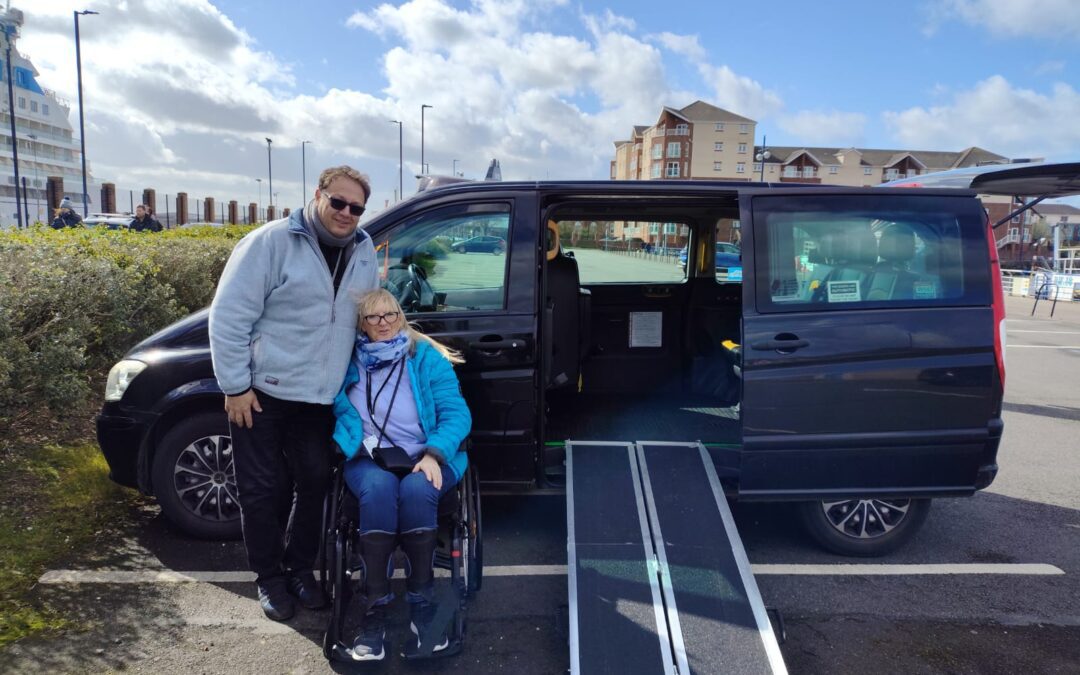
          The Newcastle Taxi Service will greet Thomas and his wife upon their arrival form DFDS Newcastle Ferry Terminal. Our accessible vehicle can accommodate a wheelchair, ensuring a comfortable experience throughout the tour.


          Itinerary


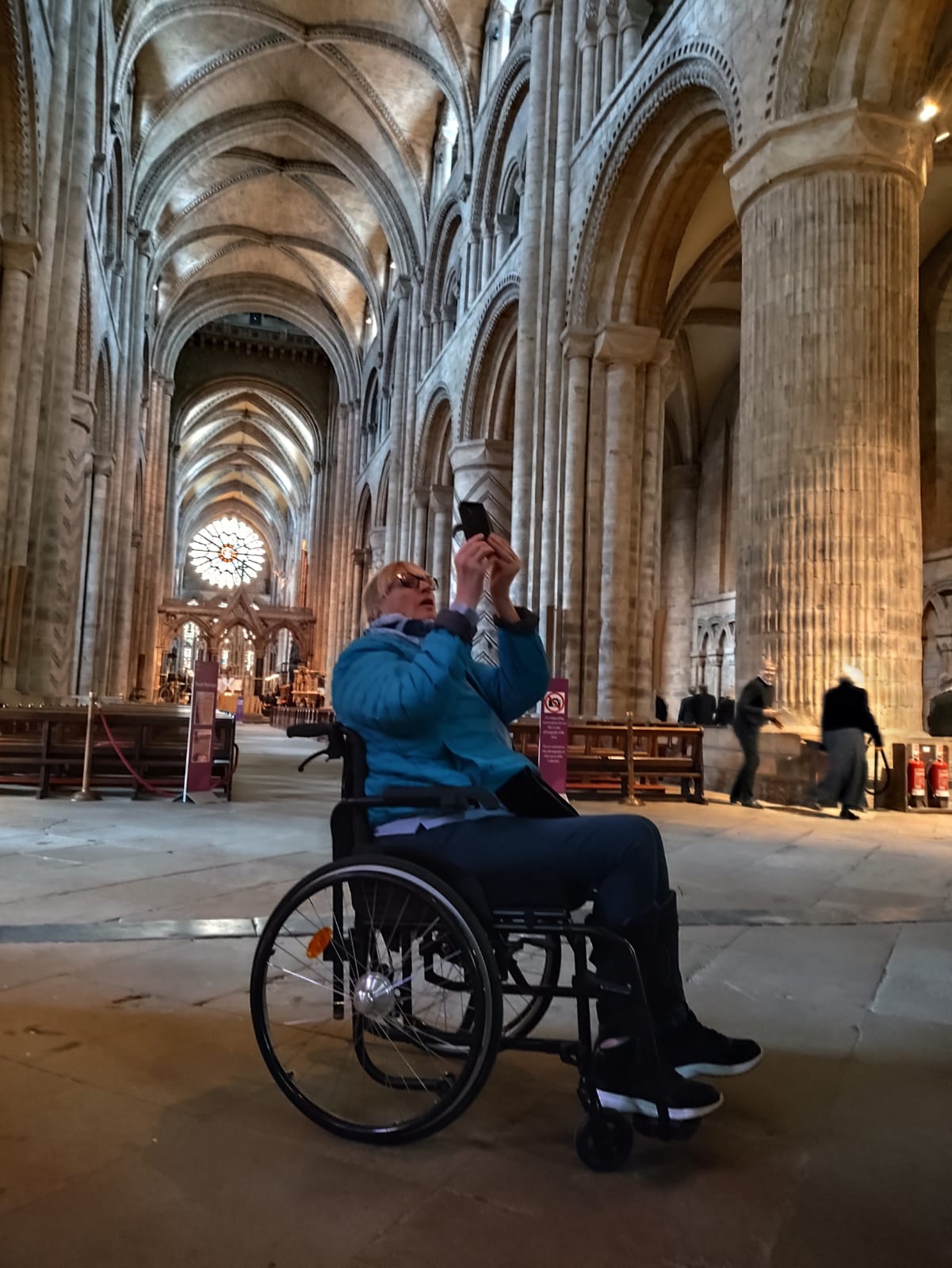
          Durham Cathedral


          • Time: 45 minutes
          • Details: Explore the magnificent Durham Cathedral, a UNESCO World Heritage Site. This iconic building is an architectural marvel with historic and religious significance. We will provide an accessible route to ensure that Thomas and his wife can enjoy the cathedral's grandeur.


          Newcastle City Wall Sightseeing


          • Time: 30 minutes
          • Details: Journey along the remnants of the Newcastle City Wall, where we'll discuss its history and role in the city's defence. The route has been planned to be wheelchair-friendly.


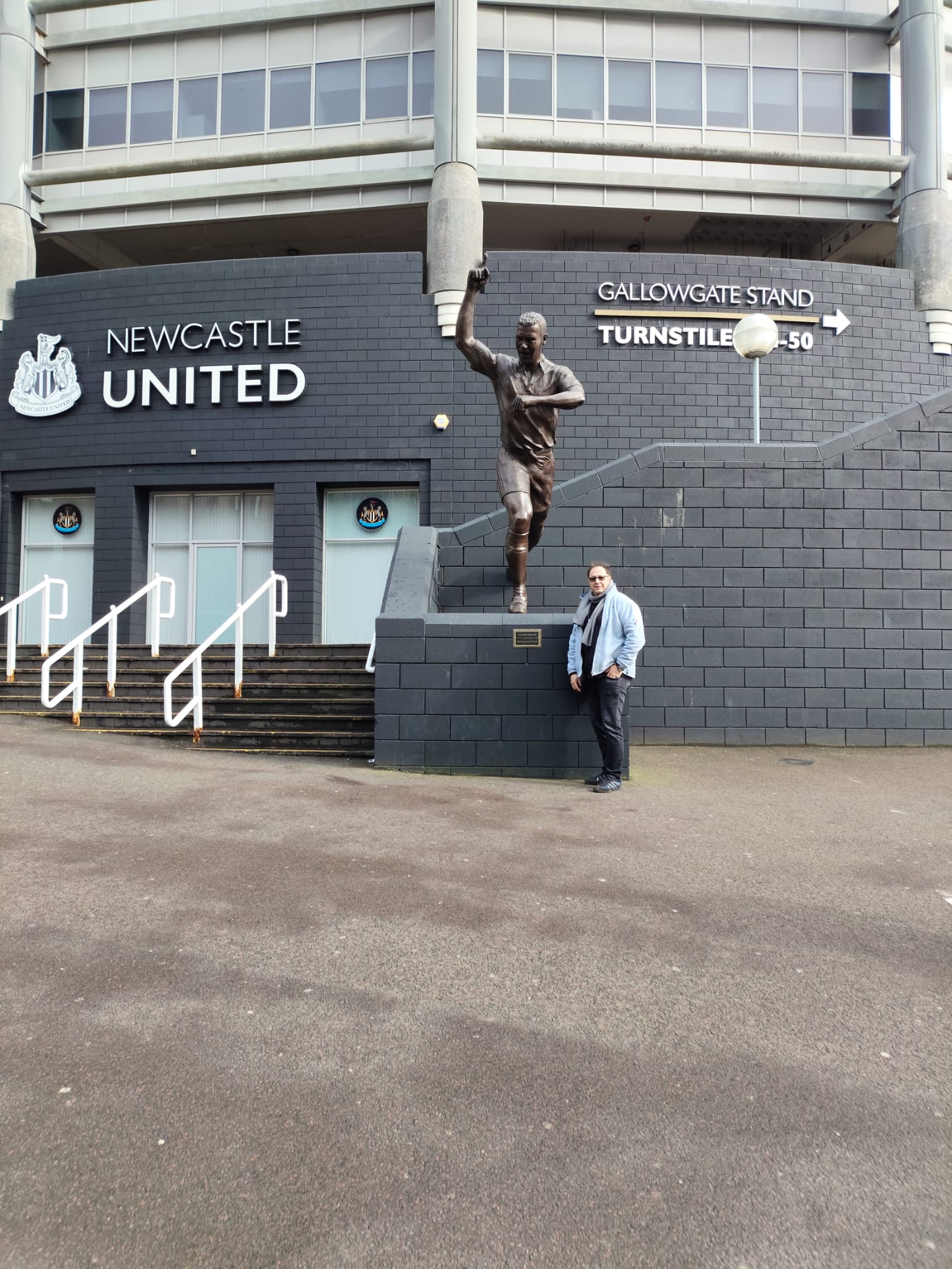
          St James' Park


          • Time: 45 minutes
          • Details: Visit St James' Park, the proud home of Newcastle United. Capture the spirit of the passionate football city and hear stories about the club's history and achievements.


          China Town


          • Time: 30 minutes
          • Details: Experience the vibrant atmosphere of Newcastle's Chinatown, a hub of culture, with various food and festivities on offer.


          Return to Ferry Terminal


          • Time: 30 minutes
          • Details: We will ensure a timely return to the ferry terminal, allowing Thomas and his wife to reflect on their memorable tour or to prepare for their ongoing journey.


          Please note that times are approximate and can be adjusted based on Thomas and his wife's pace and interest.


          Additional Services:


          • Onboard Commentary: Our driver will provide engaging commentary tailored to the interests of our guests.
          • Assistance: Our staff will offer assistance at every stop to ensure a seamless experience for Thomas and his wife.
          • Photography Help: We're happy to assist with taking photos to capture memories of the day.


          Contact Information:


          We look forward to providing a memorable tour filled with rich history, culture, and the warm hospitality Newcastle is known for. Please let us know if there are any specific requests or needs to personalise your tour further.


          Durham Cathedral
          St James' Park