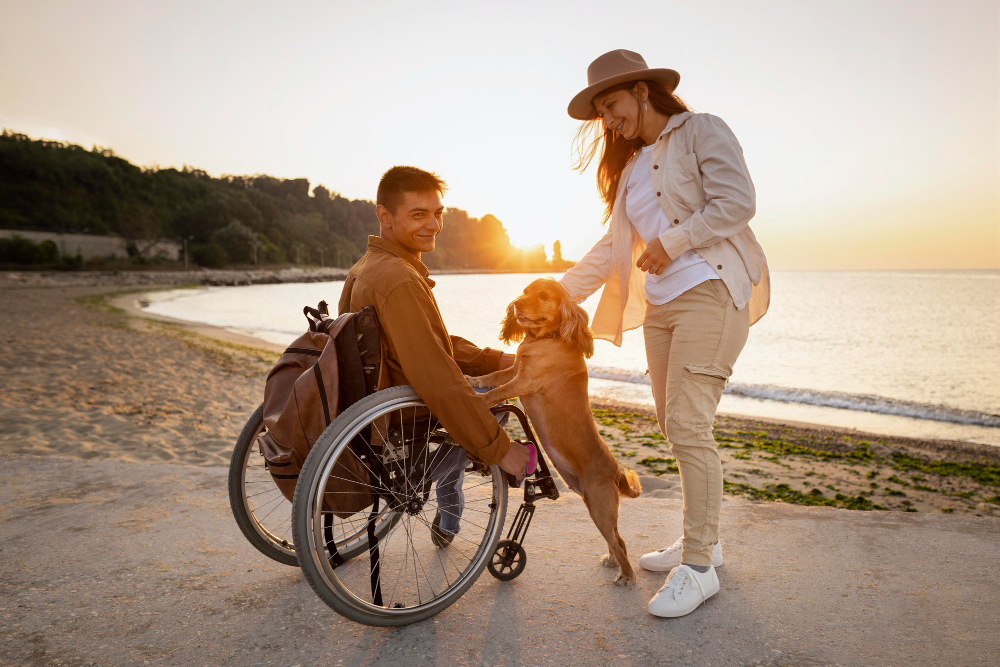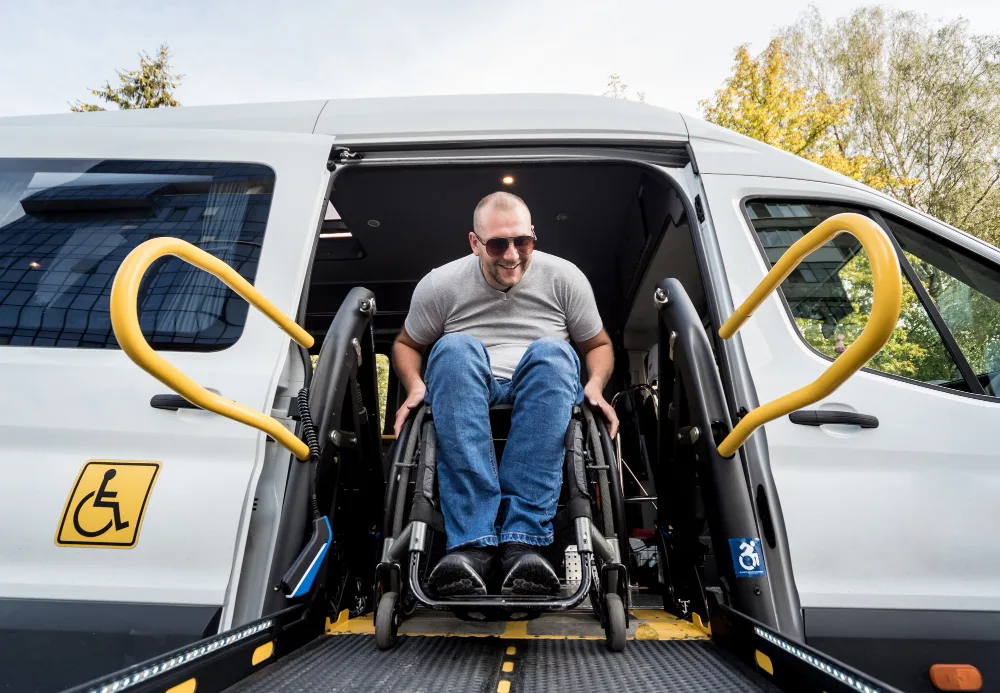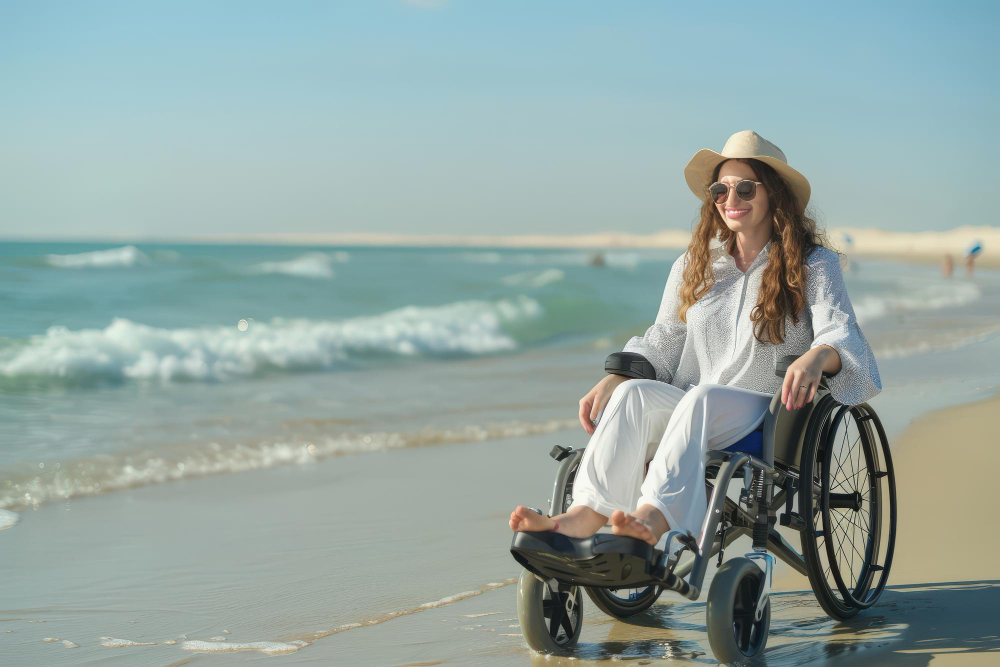
Rita's Wheelchair Friendly Adventure at Longsands Beach in Tynemouth
Longsands Beach, in Tynemouth, is a model of an outdoor recreational site, including access and facilities for wheelchair users. Located in Longsands Bay, the natural beauty of the beach area attracts users for a range of outdoor recreation activities, including water-based sports activities, leisurely strolls, and bird-watching. The beach hosts international events, including surfing competitions. Maintenance, water quality, and beach facilities all contribute to its popularity. Local authorities are working on initiatives to ensure everyone can enjoy local natural beauty spots, seaside facilities, and outdoor leisure activities. Facilities are starting to be improved to make beaches and other outdoor places with great views accessible to people with disabilities; they see such areas as destinations where it is enjoyable to do things. On Longsands Beach, our beach wheelchairs have been available in front of the kiosk for one year for hire to use at any time, and longer-term borrowed free Beach Wheel Charter wooden wheelchairs with accessible pathways were launched at Easter 2010. There have been good reviews.
Improvements have been made to infrastructure and services, including visitor facilities, as part of a sports development project to make it more accessible and safe for visitors. Longsands Beach is a destination, making it convenient for users to visit, sit, and do things, all developed with users in mind. Resources and improvements have included softer surfacing of paths between visitor facilities to make pathways more comfortable and convenient in inclement weather. This facility is suitable for people with temporary mobility difficulties who are likely to use crutches, walking sticks, or frames for a broken leg, ankle, or other foot injuries. It is not of a size to be used with wheelchairs and pushchairs taxis. It is easy to use and does not require booking, payments, or paperwork to be completed. The pathway has been cut in, and surface materials are supplied by creating an erosion control construction of a surface water wetland with reed stepping stones. The building structure of the facility is a Public Domain Design. Planting around the whole front is indigenous because the external soft landscaping is done following the local interpretation of the words: "... the north should have a fresh rainwashed look..." And because new planting will help screen the toilet block. The surrounding drainage system forms part of a state-of-the-art lead in the public vigilance to the health of the marine environment.
Overview of Longsands Beach
Longsands Beach has been named one of the top travel destinations for UK beaches. In 2019, It was rated third out of 25 top beaches, and alongside neighbouring King Edward's Bay, it represents their destination of Tynemouth. Tynemouth is consistently listed within the top ten Destination Guides and in the top 100 of Britain's Best Seaside Towns. In 2014, it was rated as a welcome addition to a guide, stating that the vibrant 'Riviera' atmosphere could rival 'any number of the Mediterranean resorts.'
Longsands Beach and King Edward's Bay are commercial assets attracting footfall. Indeed, North Tyneside Council issued a tender and appointed a cultural branding agency to work on the strategic direction, brand positioning statement, essence, and guiding output for the Longsands and King Edward's Bay project. Based on a compelling proposition, they delivered design direction, name generation, and exhibition layouts to bring the brand to life. The branding aimed to ensure the area was known for its unique outdoor recreation and healthy living opportunities available to all, but without creating a place to just lie on the beach. The challenge for the proposed brand is to create a town node where higher-value visitor activity could be encouraged all year round, bringing in higher spending to restaurants, bars, accommodation providers, and retail facilities. Times quoted in our survey indicated that four out of five Longsands Beach visitors were still families with children. Longsands Beach is located in Tynemouth on the northeast coast of England. Tynemouth is a small town in the borough of North Tyneside and is part of Tyne and Wear.
Accessibility Features at Longsands Beach
One of the first steps needed to make Longsands Beach truly inclusive is to make it accessible to as many people as possible. One way this has been achieved is by installing a range of features that allow people with various levels of mobility to access the beach and adjacent paths. These physical changes include the installation of ramps that provide a gentle sloping route from the northern promenade down to the sandy beach. They also include the construction of a flat, stony path that allows access from Longsands South car park up to St. George's Church at the northern edge of Longsands Beach. These work together to provide access to a significant amount of the beach, access to the Sea Trials folly, and access to the boathouses and cafes along the beachfront, including Crusoe's and Tynemouth Beach Kiosks. Furthermore, Tynemouth has also invested in a range of equipment that can be hired and booked to help make the experience of going to the beach better for people with mobility challenges.
Referred to as 'Beach Essentials' stations, each of the three main beaches on the coast nearby provides beach wheelchairs, beach blankets, and beach mats, and the local council provides mobility scooters and manual and powered wheelchairs, free of charge, via a Bookable Challenge Wheelchair scheme. From speaking to users of Longsands Beach, it is clear that these modifications have made a big difference in how they, their relatives, and children visit and use the beach. One visitor expressed their appreciation for these modifications as they allowed them to access and enjoy the beach with their family and friends in the summer months and to relax, knowing they can easily get onto and off the sand. Another visitor also mentioned the importance of these modifications in making the beach welcoming for everyone, not just tourists and day visitors. When asked about the most enjoyable experiences when visiting Longsands Beach, one visitor stated, "It's lovely to see people enjoying themselves at the beach from various backgrounds," implying that Longsands plays a vital social role in the local area. These historical connections between the area and disability play into Longsands Beach's recent changes, reflecting the continued links between the site and inclusivity. Indeed, the general response to the inclusivity and accessibility measures was overwhelmingly positive from both locals and visitors to Tynemouth, given the number of people visiting here. Feedback about the visually distinctive chairs or the free hire of beach chairs was based on generally asking for more of the same.
Rita's Adventure: A Personal Account
As she entered the car park at Tynemouth's Longsands Beach, Rita's nose crinkled at the scent of seaweed baking in a mid-July sun. She had been told that the changing place facility would provide a bed with a hoist and changing benches for someone like herself. When she asked, she was told there is a changing bench, with lots of room to move about. As Rita unpacked the bits of herself from her wheelchair that would help her fettle 'the beast', she stopped, and this is what she heard:
"Eh - what do you want to go down there for?"
So, Rita gets about in 'the sort of big wheelchair, like, to get her out and about' that Martin pushes. She's looking to get flush or as near as can be to nature. And she wants to wear her swimsuit alongside her companions. She knows she could just hoist her change of clothes into a backpack and perhaps that of the folk who help her walk, but she wanted the independence the changing bench would provide. Then, she could rejoin the people laughing and rambling in the early evening.
She thought A bit of beach, sea, and nature would be very nice. Rock pools attract her, and the sight of little fish darting away from the palm of her hand is very therapeutic. To get to Longsands Beach, we travel through that small town and meander past the remains of the Priory's ancientness and then, there it is, Longsands. Two well-known cafes and changing places are set back a little from the sweep of the beach, and at the road's end, there's a haven for doughnut lovers and sweet stuff fondlers. The promenade is at a low gradient when you enter its driveway, so crossing from the road to the beach is easy. You know you're at Longsands when you see and smell it. Hummelly drummers are people lounging about, chattering, and doing what people do at the beach. The sound of the sea waves in your ears and that smell. She took in a long, slow, relaxing breath. Only beaches smell like that. And it felt good as if fresh seaweed could bring some freedom to her in the absence of the special changing bench.
Rita's Background and Experience
Rita's Wheelchair-Friendly Adventure at Longsands Beach in Tynemouth
Rita who has used a manual wheelchair for the past year due to a spinal cord injury, with some hypaesthesia in her legs. When initially injured in 2016, she had some upper and lower abdominal weakness but had previously been able to walk with a stick. However, since a further fall, her mobility has been unusually poor. Rita encounters regular problems concerning physical access, particularly where a lack of facilities exists in older buildings. Also, on public transport, local restrictions apply to wheelchairs with spoke wheels, as with her standard wheelchair. Given her disabilities, Rita engages in a lot of sports, including wheelchair-specific sports. She also makes use of her electric wheelchair and wet chair.
For Rita, going to the beach holds a special meaning; a taste of heaven. It is normal for her to feel shivers down her spine and her hair stand on end from the experience of the sea and nature and to feel "powered up." The opposite can happen if she has not been outdoors or to the beach for a long time, making the experience somewhat distant for her. At the beach, "it feels very lonely and lost without the outside experience, being close to wildlife, close to water; it can feel very empty, very mentally isolated without that experience in our lives." She first went to the beach early in life and "felt it and wanted to experience more of it. It has always had an emotional appeal for me." The countryside first drew her attention when she was six, and she felt a similar reaction. Nature and the view drew her like a magnet. "I was into a little bit of art as a child... I think they were feelings of lighting up my heart and my imagination instead of engaging purely with family life." "Beach lovers" is the phrase her family would use, as they have shared in her passion. A carer would also take her to South Shields beach. After her work with a creative charity where they would take long walks and engage with the sea, she realized how much this emotionally uplifted her. As a child, her family would go camping often, and she remembers seeing lively pictures of gardens and animals in Cornwall. This "experience of wildlife was very captivating," Rita noted that she may have used it in a painting. An aunt had pointed out new and fascinating creatures and birds in these locales. "But not just that, she could see the little shore habitats I'd create."
Challenges and Triumphs
For much of the time I was at Longsands Beach, I was either dodging parked cars on the road, careering all over the place on the loose pebbles, or trying in vain to get back onto the promenade. I was reminded again and again that working together with local communities could indeed do a lot to break down cultural oppression around disability. Every now and then, I struck it lucky and was able to bask in the best that Longsands had to offer without having to fight for it – and in these times, it paid off in terms of my emotional response to the place as well.
I could give a big, blustery narrative to my visit to Longsands, talking about the emotional highs and lows, the struggle for physical access, the worry about what strangers might be thinking of me, and the personal triumphs coupled with feelings of deep spiritual connectedness to nature. I could then explain, as if it served as a heartrending punchline, that I only became a 'mystery shopper' for a folk-based group at the local college. But this would sum up attitudes to the place as trivial, complex, and ultimately reducible to the outcomes of one person's personal adventures.
Community Impact and Future Directions
An accessible Longsands Beach can strengthen an overall feeling of community by becoming more socially inclusive. Tourism can increase if Tynemouth, South Tyneside, and Newcastle are promoted as accessible to all. The economic benefits of tourism are well known. However, we should not only consider the economic business sense. The variety of visitors and their specific access and mobility needs and preferences will generally enhance the North East's tourism, recreation, and cultural offerings. The Heritage Coast will become more vibrant and unfold its full potential if a more diverse market of visitors uses the area. This could enrich the ongoing uses, stimulate the consumption behaviour of visitors and locals, and extend the use time of the outdoor space in general. With its variety of usage, the beach can integrate the outdoor area fully into the Northeast cultural landscape. The different users allow us to paint a rounded picture of the area. The outcomes of the preliminary stakeholder workshops show that the development of access, both for general access to the beach and for capitalizing on the socio-economic gains in tourism created through making the Heritage Coast accessible, should be a gradual process, incorporating stakeholder ideas and opinions. This staged development of access would also allow the statutory agencies and organisations to develop in-house strategies and policies that encompass the area and establish ways of engaging effectively with stakeholders. It is anticipated that the development of access initiatives will be taken forward by a voluntary hierarchical assembly of stakeholders, which has the support of the local authorities and other stakeholders, including the Beach Wardens. In developing and implementing the larger initiatives, connections and protocols involving various sections of the private, public, and voluntary sectors directly affected by the work would be drawn up. These connections include a beach users' action network and, as an initial strategy, promoting the beaches to various users. In developing the different strategies, clear lines of reporting and accountability will be established among stakeholders and councils. This is necessary so that there continues to be a basis for review and the scope to revise and integrate management practices to meet changing or developing people's needs and the conservation implications.
Benefits of Inclusivity at Longsands Beach
Longsands Beach is known to be a positive and inclusive community space, and people thought the benefits of increasing this would apply. Many people said that the main benefit of Longsands being even more inclusive than it is would be the increase in the number of people able to enjoy the beach and sea. Individuals with disabilities would have easier access to amenities, including water assessment. This would break down barriers and give people the freedom and the right to participate in everyday life. Someone commented that everyone has the right to sit on the beach. The emotional responses may be intangible but are expected to be significant. People also spoke about Longsands Beach being a place where everyone mixes together and that inclusivity here could encourage further inclusion in the community. People mentioned the emotional and social benefits of attending Longsands, reporting that they often take elderly relations not for a swim but to put their feet in the sea. People spoke about barbecues, parties, and family trips to the beach.
People consistently referred to the nice vibe here, and everybody chatted away. Some business owners and managers discussed how more visitors could boost the local economy. This would benefit the café owners, surf instructors, and other established beach users. The beach would attract the sandcastle and doughnut tourists who have previously bypassed Tynemouth in favour of Whitley Bay or South Shields. This broader user group is likely to include people from further afield. Parents caring for people with a disability could join in and socialize with their peers in the knowledge that if there was an emergency, the appropriate support would be available. Therefore, inclusion here could reduce social isolation. It was reported to help in supporting the well-being of informal carers.
Similarly, children and their siblings live with a similar, significant burden. Longsands was reported as a place in my community that enables the life of my children to be close to as mainstream as possible, despite one being a wheelchair user and the others not. Businesses and a café owner who was in touch with this community said the same. By providing facilities, they have built up a community of people who have one thing in common: disability. But they go surfing, paddle boarding, and coasteering together. They became friends, and they met for coffee at my business. So, inclusivity could indeed draw in visitors.
Recommendations for Further Improvement
The following recommendations are drawn from the results and are put forth to create a more physically accessible and inclusive experience for visitors to Longsands Beach. They are intended to be used not only as suggestions to improve Longsands Beach but also as a template, a potential "blueprint" that can be adjusted and adopted by landowners, managers, and practitioners to improve accessibility at their venues. There is a clear need for similar research on other venues or in-depth surveys of a greater number of venues so that greater or different locality-related recommendations can be given. Further suggestions for improvement include but are not limited to: - Additional ramps, wooden paths (enabling easier access to the beach) and the introduction of specially designed equipment (which allows wheelchairs to move over the sand without difficulty and encourages independent mobility on the beach). - Local partnerships and community partnerships that raise awareness of Longsands and all it has to offer. - Regular, ongoing assessments of both the improvements made and the needs that visitors report. - Collaboration with local disability advocacy groups regarding ongoing awareness raising and future development of the offer at Longsands. - Better staff training in disability awareness and what is possible at Longsands can help alleviate fears of the unknown. While all these recommendations are based on the results that we have gathered, and these were acknowledged as a useful component of progressive change in accessibility to Longsands, one conclusion was that there will always be different access needs and that we should not view this as an endpoint. The results and suggestions were informed by a checklist produced by the Countryside Agency and the concept of "ecotourism" experienced by some less able-bodied visitor groups. Our recommendations were partly informed by correspondence with a local association and the current practice and future expectations of Longsands Lifeguards. Our constraining factor was a lack of direct experience in the formulation of improvements to physical accessibility. We suggest that future work to operationalize our suggestions draws on community partnership recommendations and/or the experience of practitioners involved in the physical and site-level management of such areas as Longsands. Given that the nature and ethos of Longsands amply demonstrate public access, under the banner of "Access for All", is also a crucial governing factor to the recommendations in terms of operational management.
Rita Trip To Longsands Beach
Our case study of Longsands Beach has shown that outdoor recreation can play an important role in fostering engagement with one's community and contribute to an individual's general sense of well-being. Most outdoor recreation users are white but come from both Tynemouth and further afield. This reinforces the importance of offering a general welcome and involving local people in the development of the outdoors, thereby boosting community cohesion. Our in-depth study of Longsands Beach also demonstrates that a comprehensive approach to accessibility can add considerable value to user experience. Disability groups are the most likely to have specific needs whose consequences can easily be felt as barriers if not addressed, but they are far from being the only group to require some form of 'tweaking' to settings in order to gain an equal opportunity to participate successfully. Our focus group's strong opinions on additional features and the local business's initiative that has supported more tourists are testament to this.
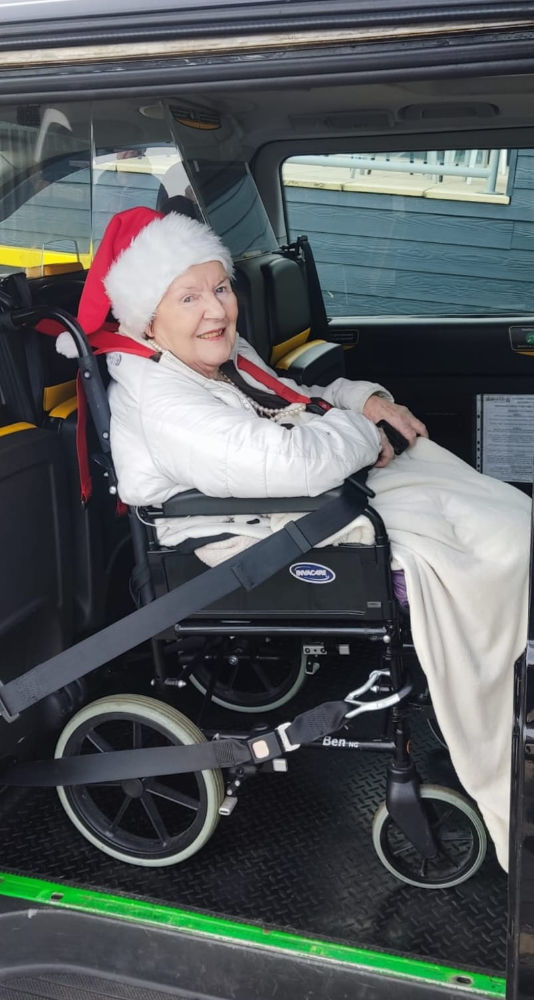
Our case study has also revealed that the benefits of enhancing Longsands to improve its inclusivity can reach well beyond the users for whom changes were intended: a welcoming focus keeps members of the wider public who experience temporary barriers satisfied and visiting and can benefit businesses by encouraging new customers. This demonstrates that creating and nurturing an ethos of local inclusivity at outdoor venues makes good local sense, both in principle and practice. The positive relationship between the changes and broader economic issues, such as higher numbers of users and increased diversity in the types of users, was analyzed in this report for Longsands Beach using available information. It is an area asking for a case study in its own right, implying that we suggest areas for further research. Conclusions: As with any aspect of the overall development of the outdoors, complete 'completion' of accessibility is, more or less by definition, an ever-shifting goal, where there is always more to do and more to improve. This report has sought to stimulate a process of reflection on the delivery of inclusion in the outdoor recreation sector. The research shows that all community sections' access and enjoyment of open spaces is an important function of managing the UK's countryside. Landowners and park managers are beginning to deliver in this area. There is more to do to complete this delivery.
Key Findings and Takeaways
Accessibility has greatly improved at Longsands, notably including a Mobi-Mat for wheelchairs and pushchairs and new sensory signs. This investment helps ensure accessible space, offering social, emotional, and economic benefits. For families like Rita's, this area is becoming the 'brains of Tynemouth,' somewhere they have clear, fresh air to wander on a Sunday morning. Beyond practical recommendations, we aim to ensure that people working in outdoor spaces or outdoor recreation planning are considering the human benefits of enhancing access to our surroundings.
Making outdoor spaces accessible provides a range of benefits to those already using the space and to new visitors who have previously not been able to enjoy it. It will bring economic benefits, and the difference that good training and clear information can make to everyone's experience should not be underestimated. What has been demonstrated here at Longsands is that there is scope to continue to think and reflect on better practices regarding inclusivity and our inclusion. What is suggested above has yet to be implemented. Therefore, Rita's narrative reflects a small part of a much larger picture that we should all care about and push for tangible change in our own areas.
Rita's story seems to encapsulate many of the issues and suggestions that outdoor recreation needs to address. She is one of many who suggested that there is an 'us' and 'them' when considering people with disabilities or people less able to access the outdoors. This is a real issue that needs to be addressed. Rita is a person that everyone can relate to, and she vocalised a sense of 'difference' and exclusion that does not and should not, exist in the first half of the 21st century. This suggests that the inclusivity of outdoor spaces in and around communities matters and that there are tangible, real-world benefits for all in making the outdoors accessible to as many people as possible.